


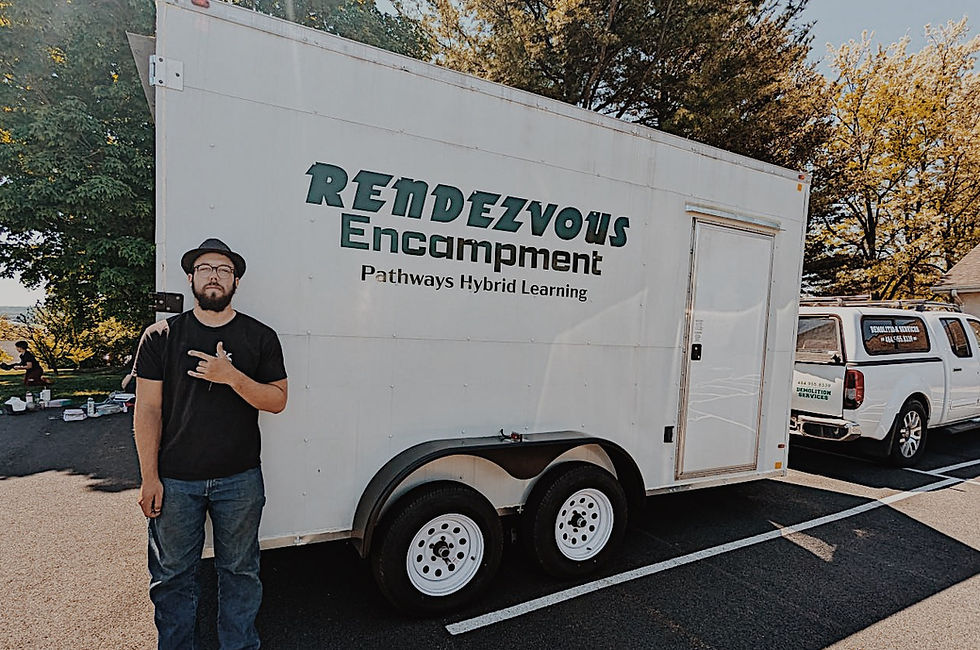
As the 2025-2026 school year wound down at Pathways Hybrid Learning, a number of events sparked joy in our school’s community! Rendezvous Encampment was a glowing success. History in real life, ax throwing, archery target courses, camp-wide competitions, singing around the campfire, hours of playing Connect Four and Shut the Box, parading Braden hog tied to a board around the camp, great food, and even greater company. Rendezvous is always a core memory for our students and we are thankful for the tireless efforts of our teachers, chaperones, and hard working students that make it all possible. A special thank you to Morgan Zimmerman for the 16 foot fitted out Pathways Rendezvous trailer that made this year’s transport so much more efficient for our packing and unpacking teams!

The History Faire was well attended and an absolute delight to see the hard work that our middle and elementary students put into imagining and presenting historical figures. Guests met history with a flair this year! Costumes, props, speeches, facts and figures, and all the splendid things that made the fair a Faire!
PIP Presentations from our high school students rounded out the year as well. Everything from kombucha to a recipe book, wood working, photography, stained glass, building and biking, playing and singing, printing and flipping, cars and cowboy hats, interviewing and fund raising, these presentations “take the cake” on creativity and commitment. As a parent and board member, I feel this could be a paid ticketed event, one I always look forward to each year. Congratulations high school students on another year of PIPs in the books! Thank you to our judges: Bob Wenger, Heather Myers, and Richard Ball for your input this year!
Graduation did not disappoint. Pathways had a record number of graduates this year. Eight seniors are heading out into the world, prepared to meet the next step head on with their faith, and family and friends cheering them forward. Gavin Forney, Abby Addison, Riley Stark, Zoe Horst, Ellie Culbert, Morgan Zimmerman, Marcus Zook, and Braden Zook, were honored by their teachers and proclaimed God’s love from the stage. A piece of Pathways history took place that night as well, as four of our graduates were the last of “the original four” Pathways students from Grade five to Seniors (Braden, Marcus, Morgan and Zoe.) Malcolm the mascot also got his diploma to the delight of all who know him! Special moments and core memories indeed. Congratulations to our graduates of 2026 !


Lastly, we headed into summer vacation by hosting the first ever Colonial Dinner Fundraiser event last weekend. The auction was held at Heritage Day, and the bid winners arrived ready for a fun night ! Four adults and five children were treated to a beautiful and musical “colonial tavern” decorated with flair by Anna Marie Zook and Josie Rudolph in the Red Room at Brubaker Homestead, with appetizers on the porch, games for the children, followed by an amazing and generous spread of three additional courses of Colonial Williamsburg-inspired food prepared by Ms Kathy Stolzfus and her dedicated crew: Mr Keith, Darlene McCosby,Janelle Nolt, Mackenzie Halligan, Lydia Zook, Tammy and Jase Steffy, and Melissa Zimmerman. Seth, Alison, Hannah, Grant and Barbara served the guests and Gennel and Jordan ‘host and hostess” ‘ed the festivities. Just before dessert was served, a surprise visitor came to the door, “Mistress Abigail Reise,” a woman who lived in this time period, characterized by Ms Wanda. Mistress Reise entered our red room portal from the late 1700’s and took her place in the corner rocking chair to regale our guests with tales of her life. The children were enchanted and this was icing on the cake for a sumptuous and full night. A shout out to Rick Edwards, weedeater extraordinaire for making the outside look nice and a huge thank you to all the staff, parents, and students who really pulled this event off with flair, beauty and enough food to feed the Revolutionary Army.
And now the summer begins. Whether our families schedule their days with activities and vacations, or just kick back and sip iced tea by the fire pit, Pathways families and staff swing into summer with a well deserved break. We will see you on August 16 for Back to School night !


